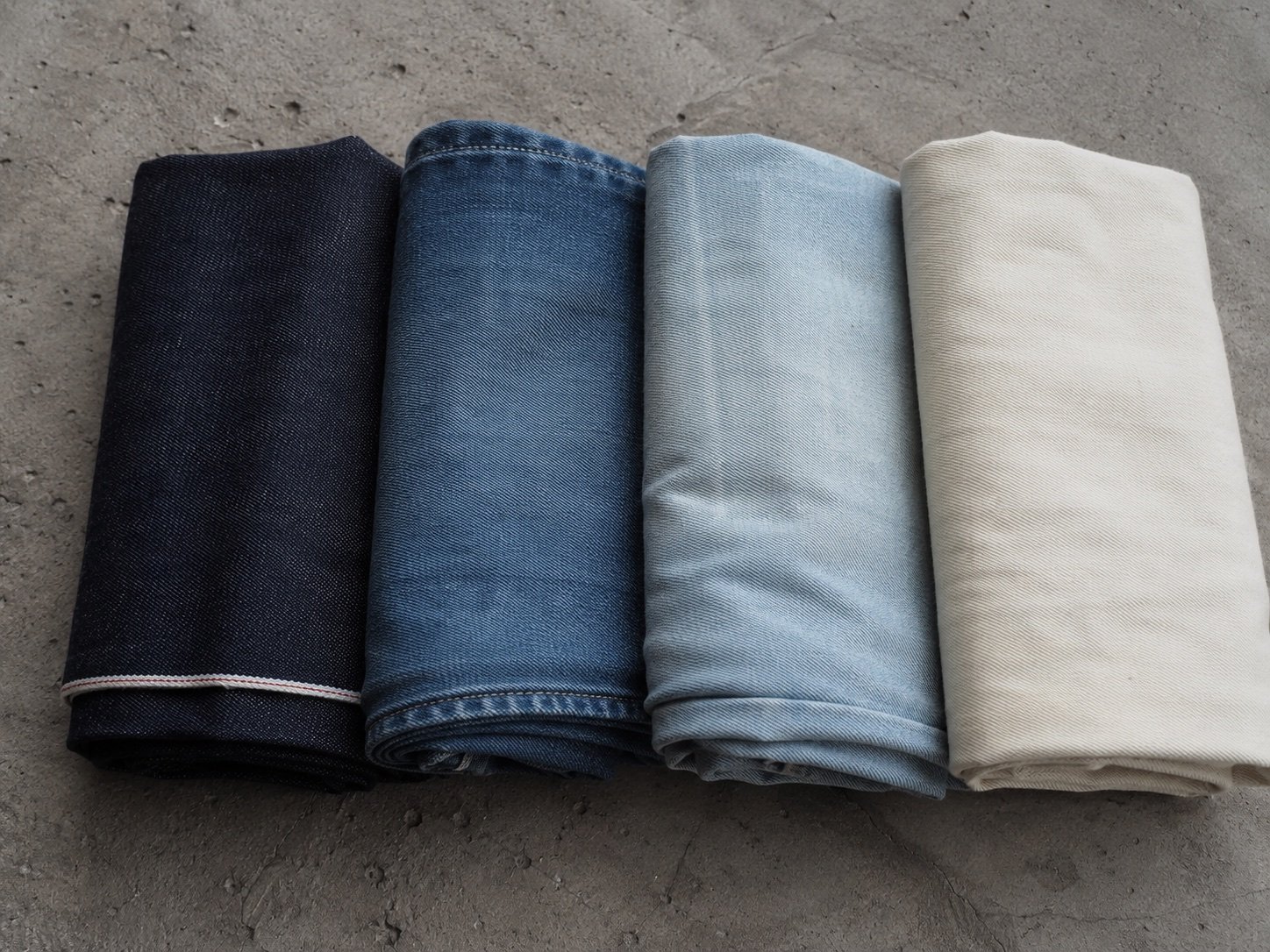
Every product page names the fabric and its weight in ounces per square yard. Weight is the single most useful number on a pair of jeans: it tells you how the fabric will hang, how warm it is, and how long it will take to break in. This page explains what each one we use actually does.
Reading the weight
Under 11oz is lightweight and drapes; 11 to 13oz is the everyday range; 14oz and over is heavy, structured, and stands up on its own until you have worn it in. Heavier is not better — it is a different garment.
Rigid denim
14oz Rigid Selvedge Denim
Woven on narrow shuttle looms, which produces the self-finished edge the fabric is named for and a slightly irregular surface that fades with contrast. No elastane, so it holds its shape rather than yours: expect two to three weeks of breaking in, after which it moulds and stays moulded. Sanforised before cutting, so shrinkage in a cold wash is under 1%.
13oz Organic Cotton Denim
Grown without synthetic pesticides or fertilisers and certified through the supply chain. It wears and fades like conventional denim of the same weight — the difference is in the farming, not the garment. Slightly cleaner surface than the selvedge, so fades come through smoother and less streaky.
Stretch denim
12oz Comfort Stretch Denim
Cotton with two to three percent elastane in the weft. Gives roughly 20% stretch across the body with recovery, which is what makes a close-fitting leg wearable all day. It relaxes over a few hours of wear and comes back in a cold wash. Two costs to be honest about: it fades less dramatically than rigid denim, and heat permanently destroys the recovery, so it can never go in a tumble dryer.
Lightweight denim and chambray
11oz Lightweight Denim
The same construction as our heavier denim in a thinner yarn. Used for skirts, dresses and summer jeans where 14oz would be stifling and stiff. Softer from the first wear, but it will also wear through sooner at stress points — that is the trade for the drape.
8oz Chambray
Plain weave rather than twill, with a coloured warp and white weft, which is why it reads as denim but behaves like a shirting. Light, breathable, soft immediately, and comfortable against skin. It is a shirt fabric — it does not have the abrasion resistance for trousers and we do not use it for them.
Hardware and thread
Copper-finished steel shank buttons and rivets at the pocket corners, which are the points that fail first. Topstitching in cotton-wrapped polyester: cotton alone looks right but breaks, and pure polyester cuts the fabric at the seam over time.
On batch variation
Indigo is dyed in ropes and finished in small lots, so the same fabric and wash name differs slightly in depth between runs. Larger manufacturers blend across lots to hide this; we do not, because it would mean holding fabric we have not sold. If you need a match to a pair you already own, email support@yoonsym.shop before ordering and we will tell you which lot is current.
Care
Weight and elastane content determine care. See the care guide, and follow the garment label where the two differ.
YOON SYM LTD
Company number 17255561, registered in England and Wales.
Registered office: Room 2, 26 Kingly Street, London, W1B 5QD, England
Email: support@yoonsym.shop
YOON SYM LTD is not currently registered for VAT. No VAT is charged on the prices shown on this website.